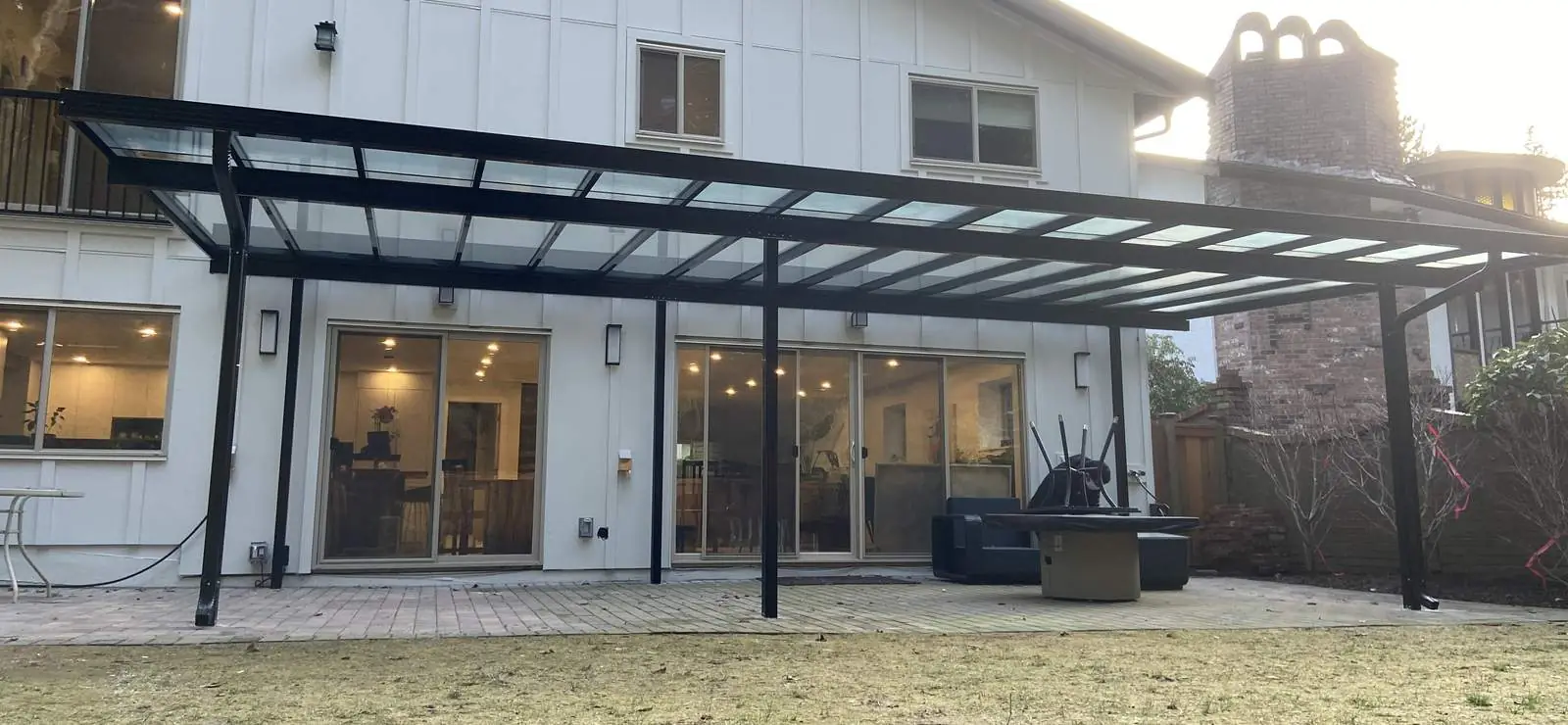
Should I choose a glass roof or an aluminum roof?
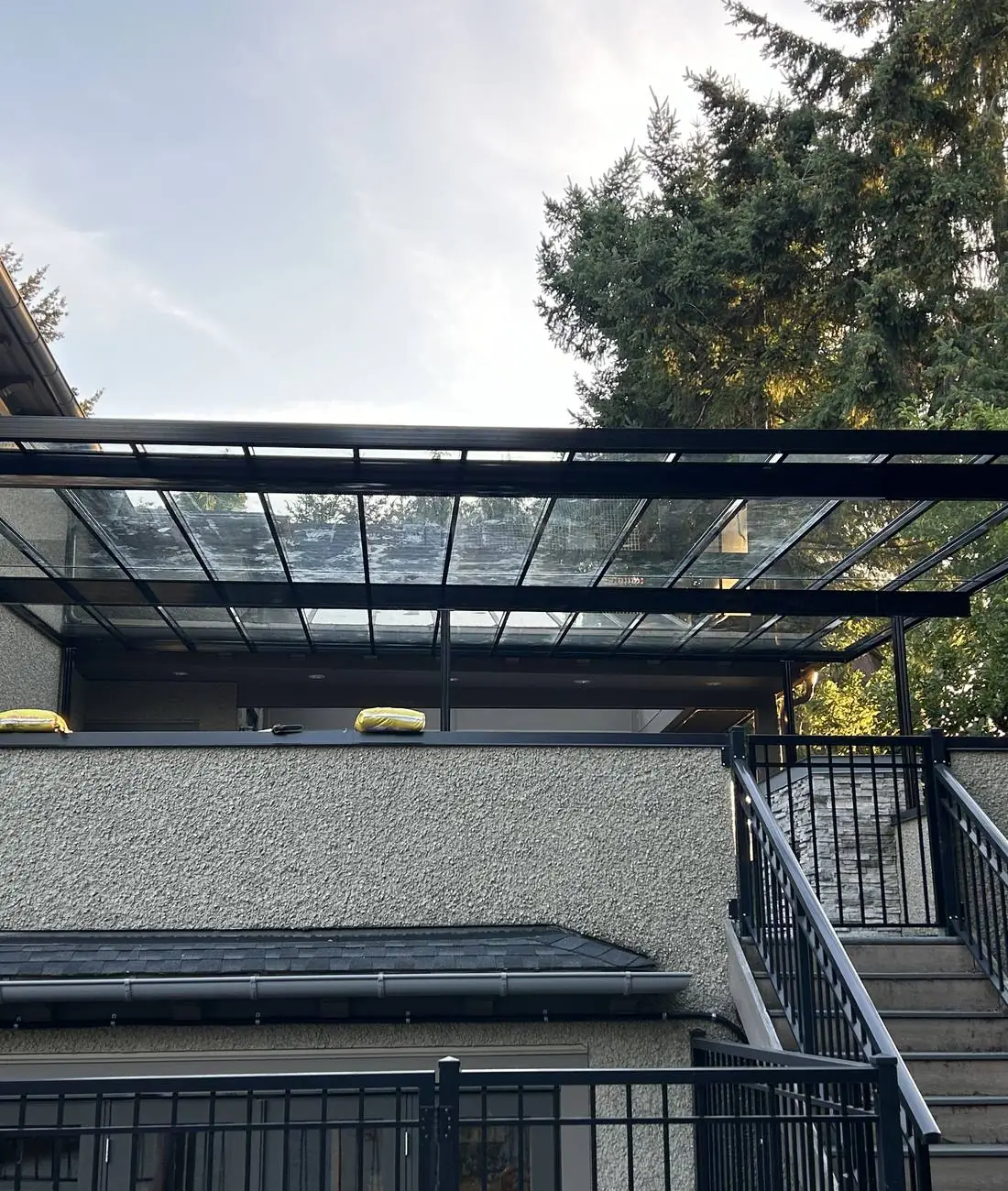
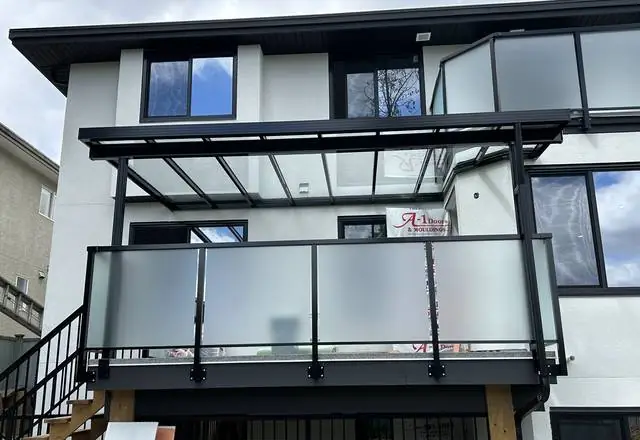
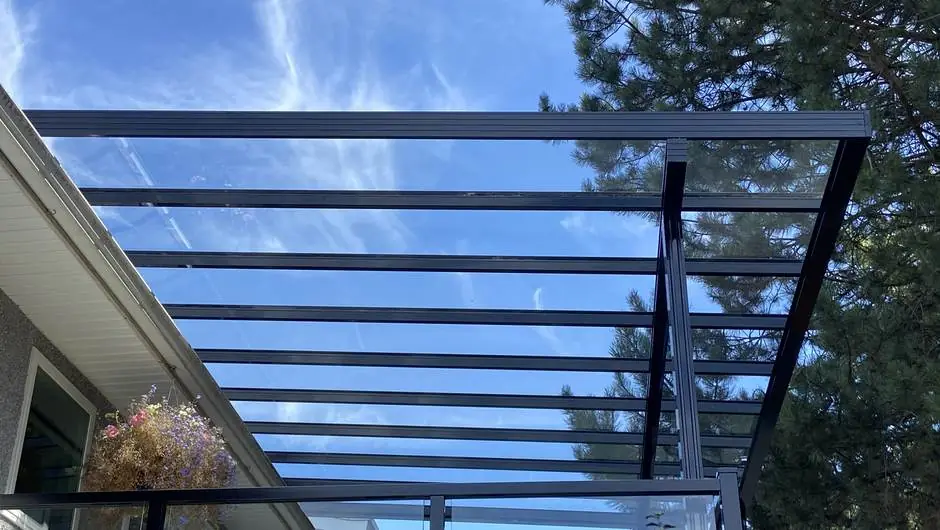
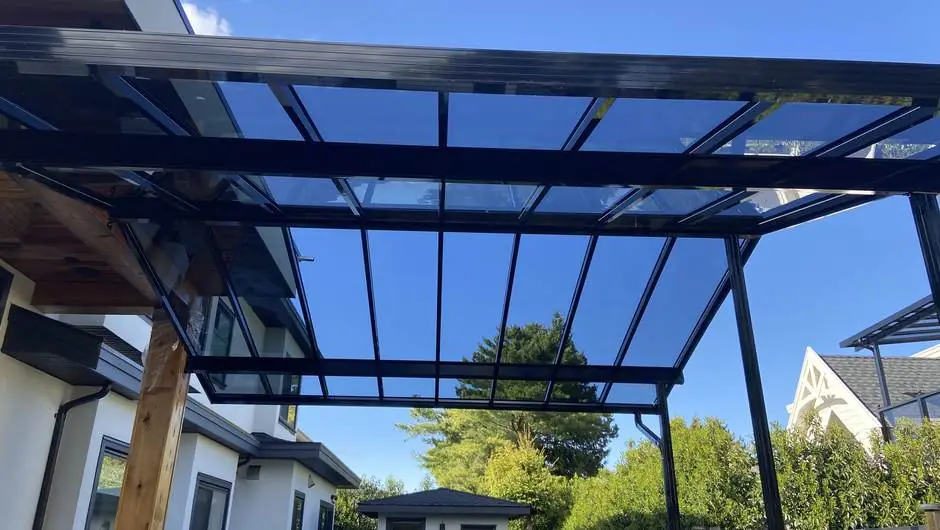
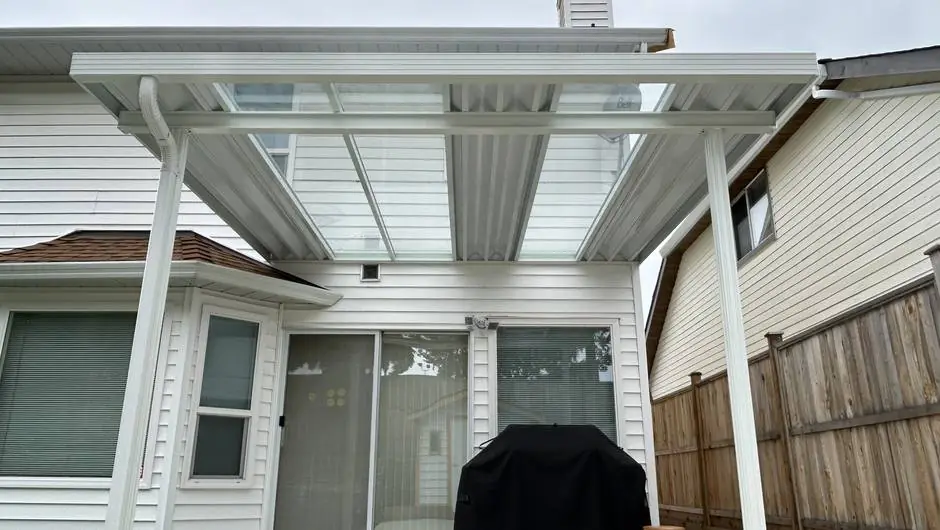
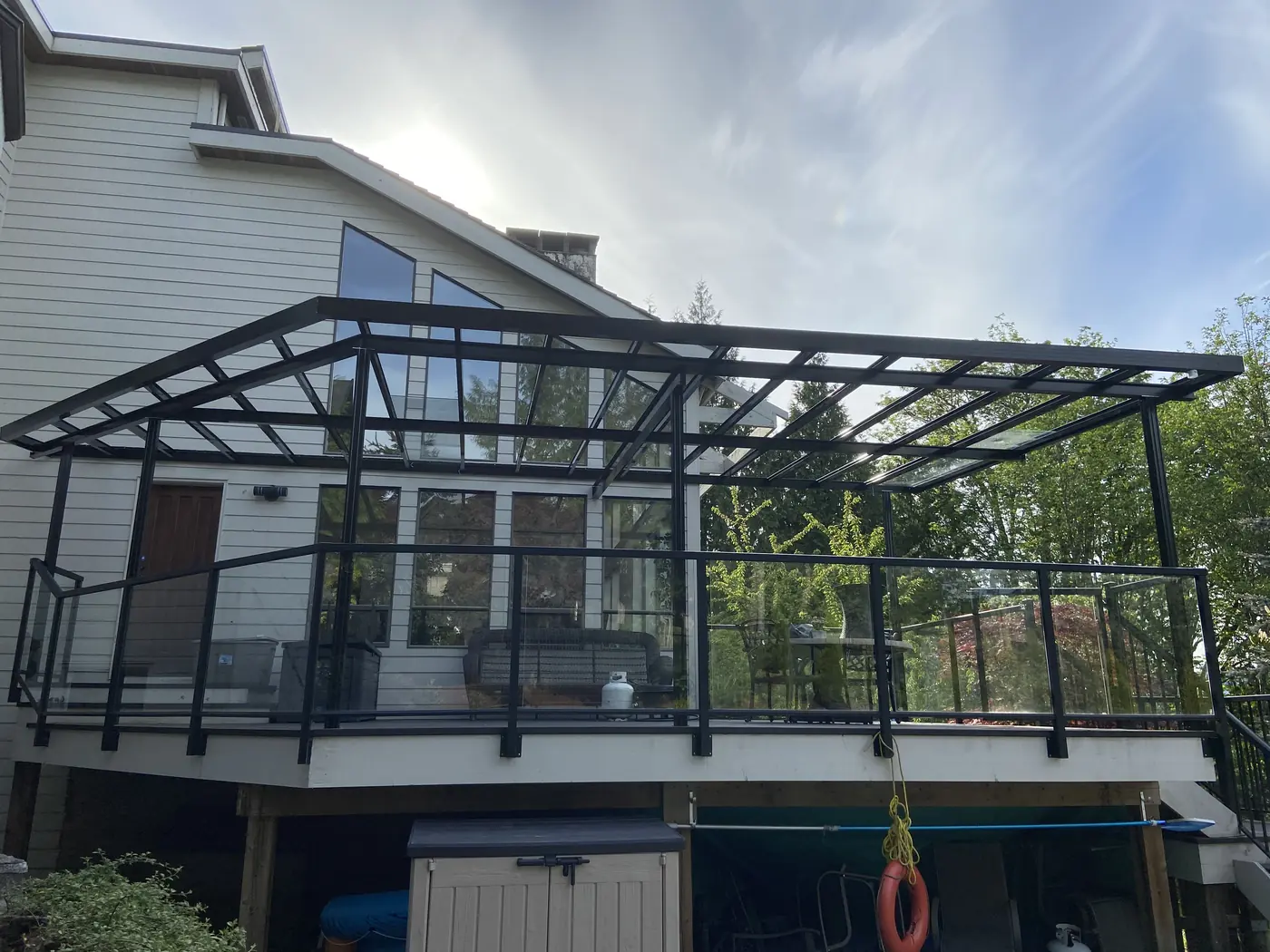
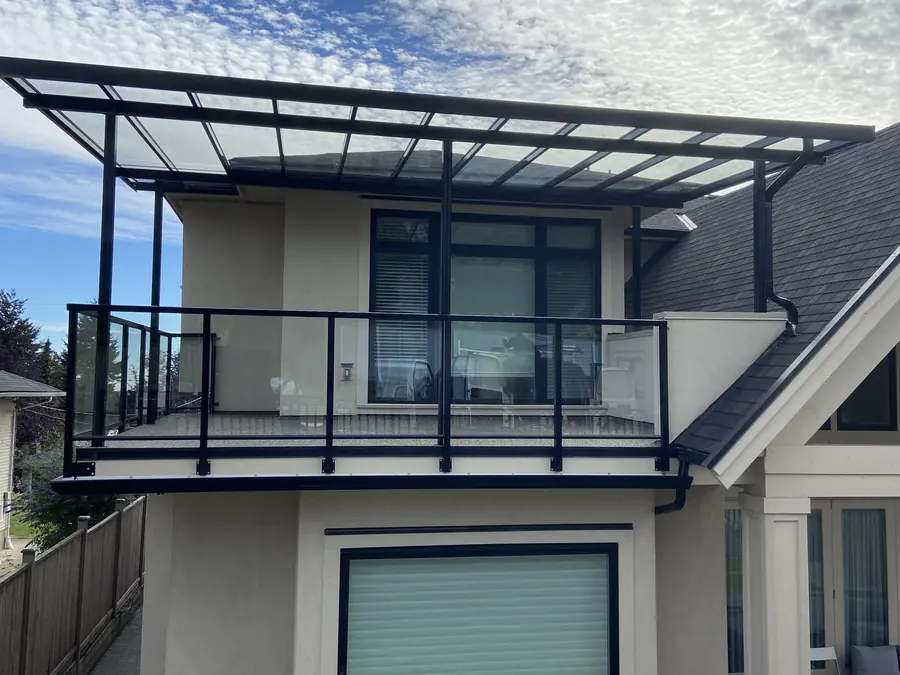
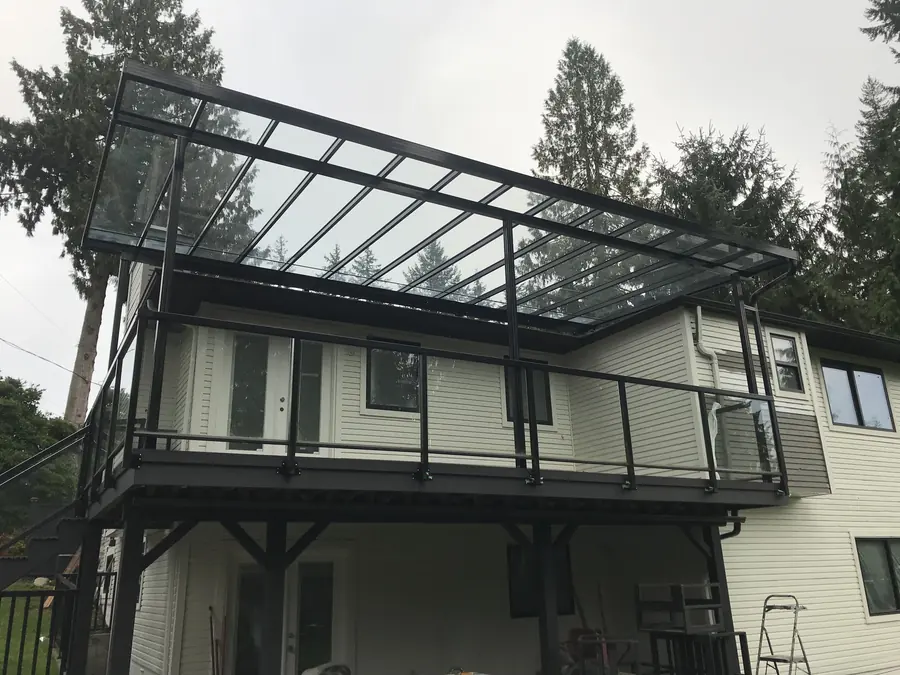
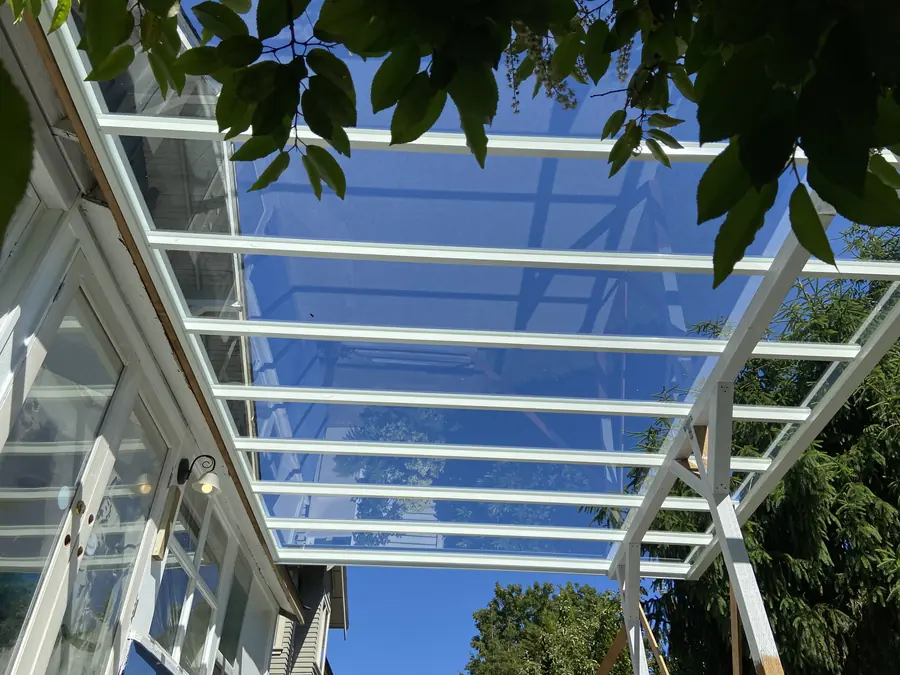
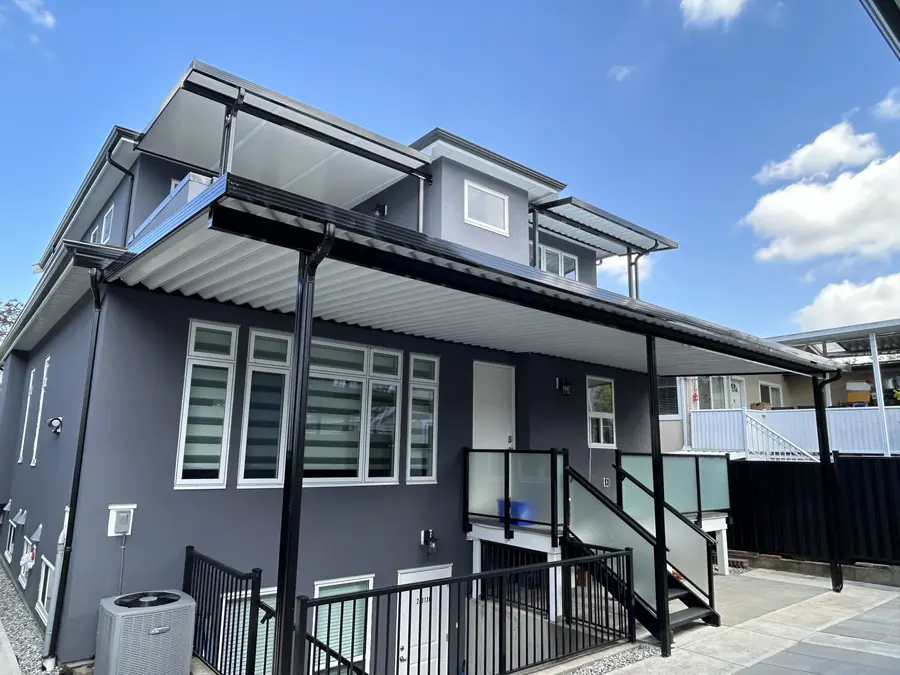
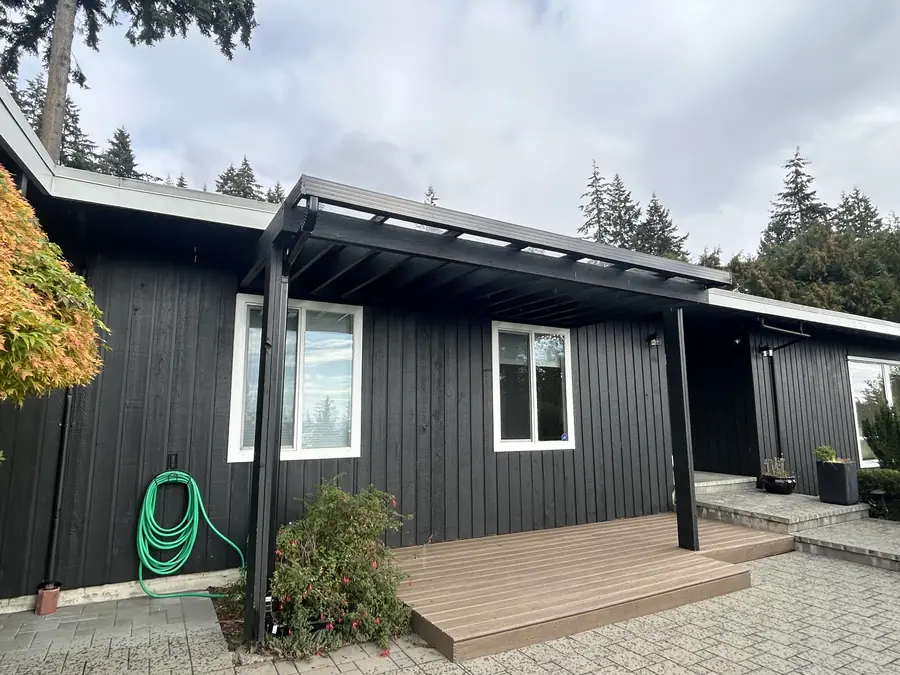
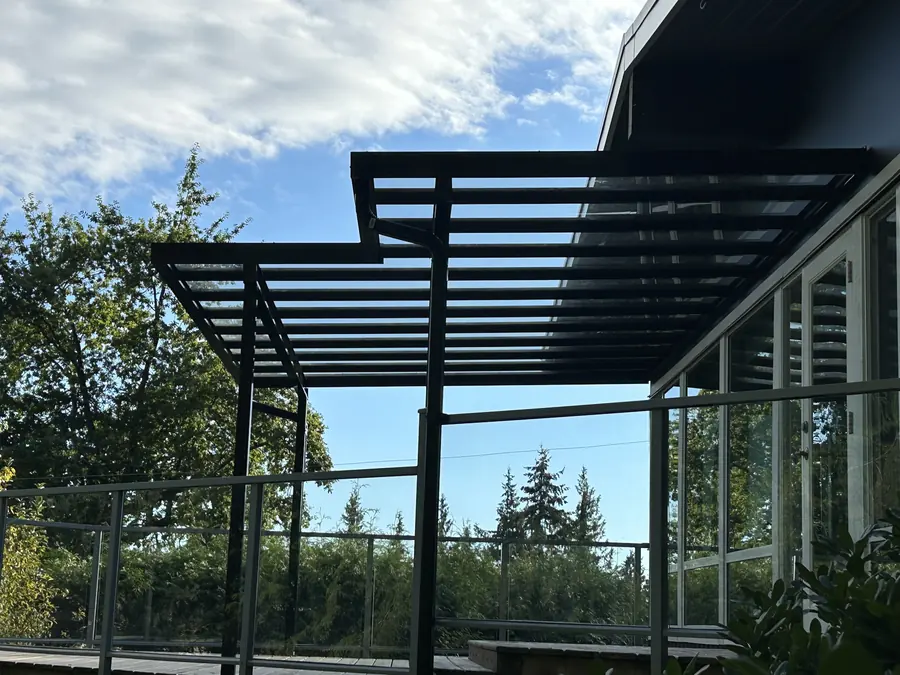
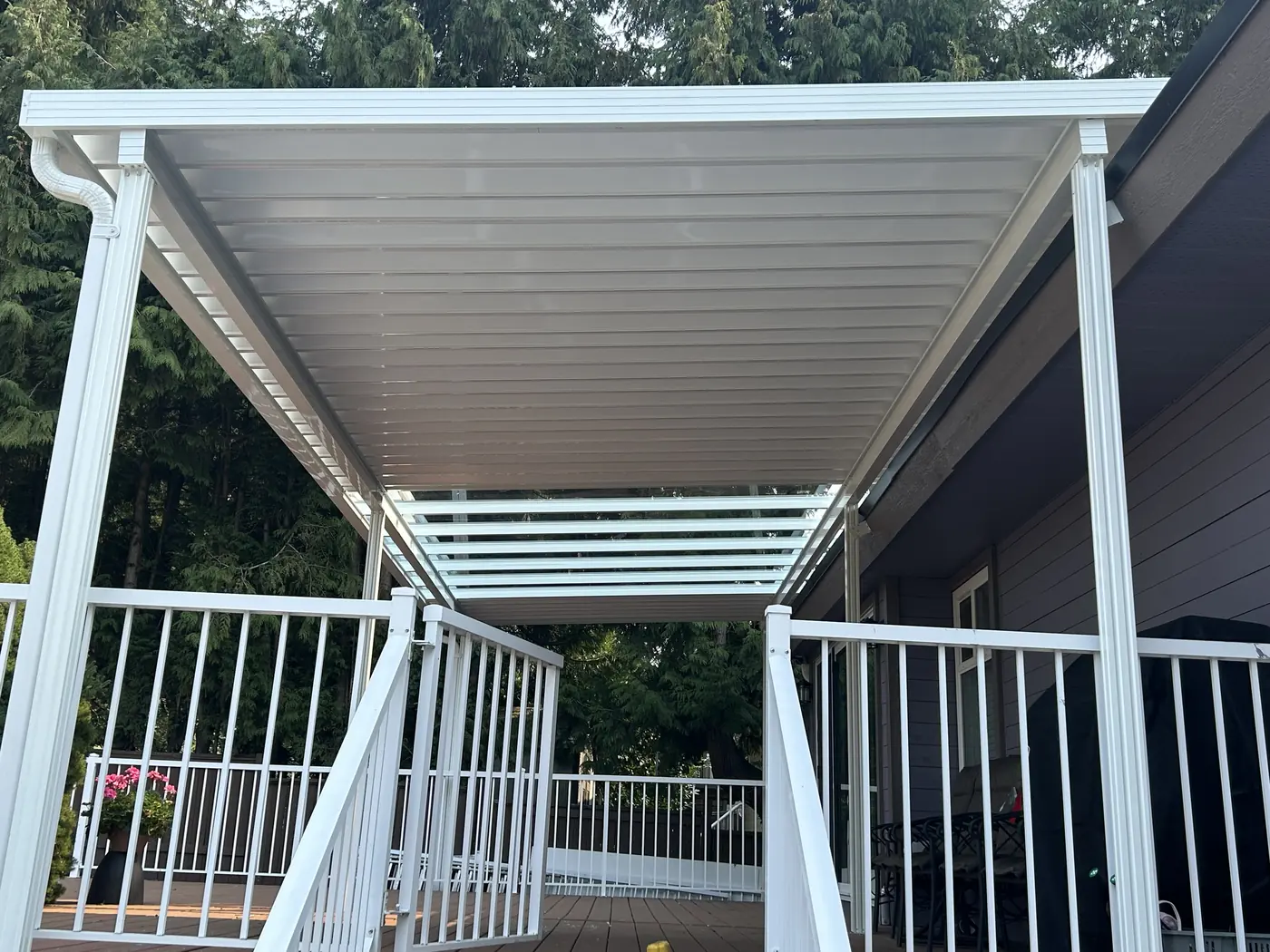
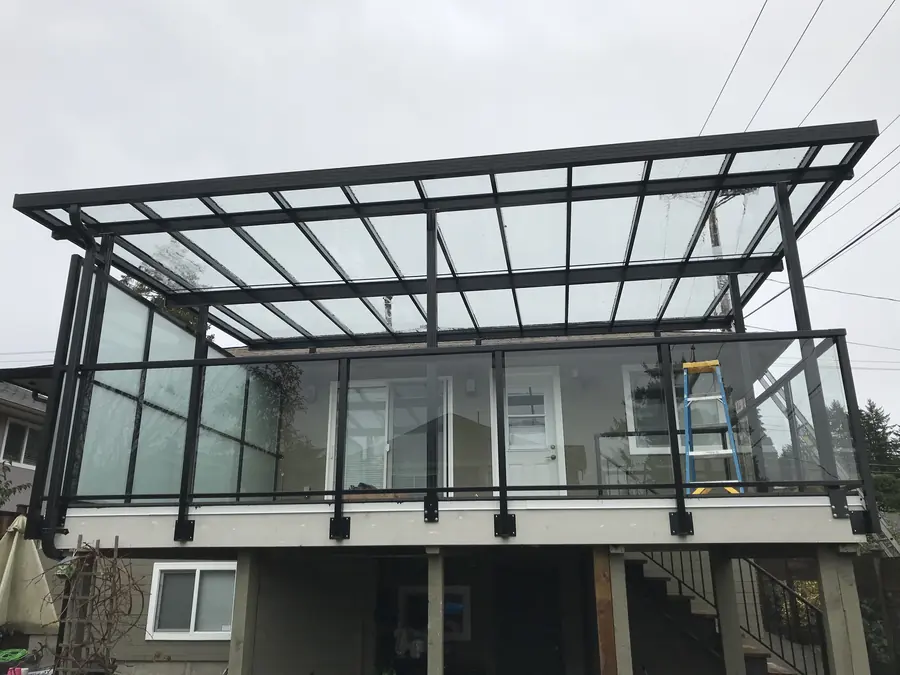
Glass keeps the room behind it bright, which matters on north-facing decks and through the winter. Solid aluminum gives you full shade and a noticeably quieter roof in heavy rain. Most families end up mixing the two, glass over the seating area and aluminum over the barbecue and the back door, and that usually costs no more than a single-material roof.
How long does installation take?
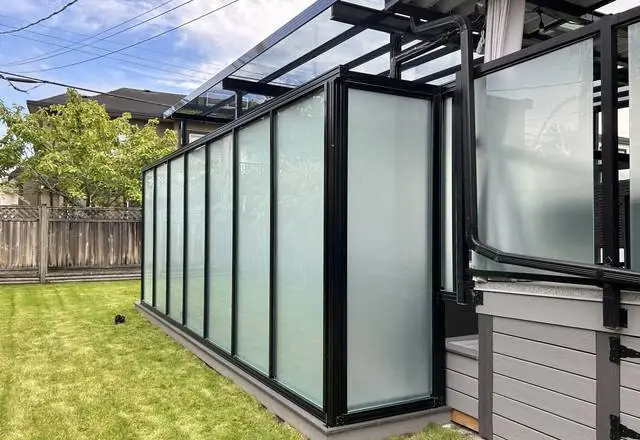
Most residential patio covers are installed in a single day once the frame is fabricated, and the space is usually ready to use the next day. Railings and carports are typically a day as well. Sunrooms run longer, since the sliding glass walls and the sides all have to go in. We take the offcuts and packaging with us when we go, so you can have people over that weekend.
Where does the rainwater go?
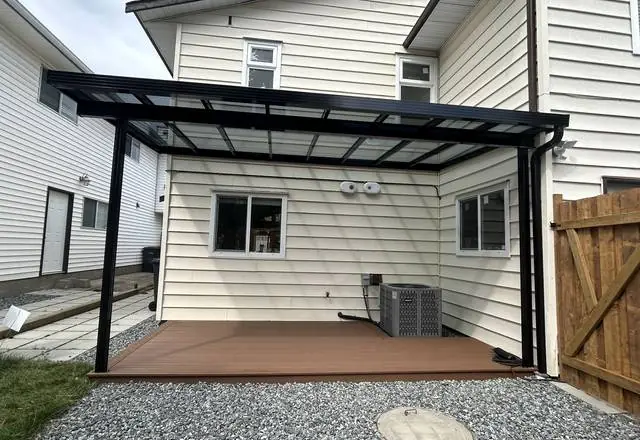
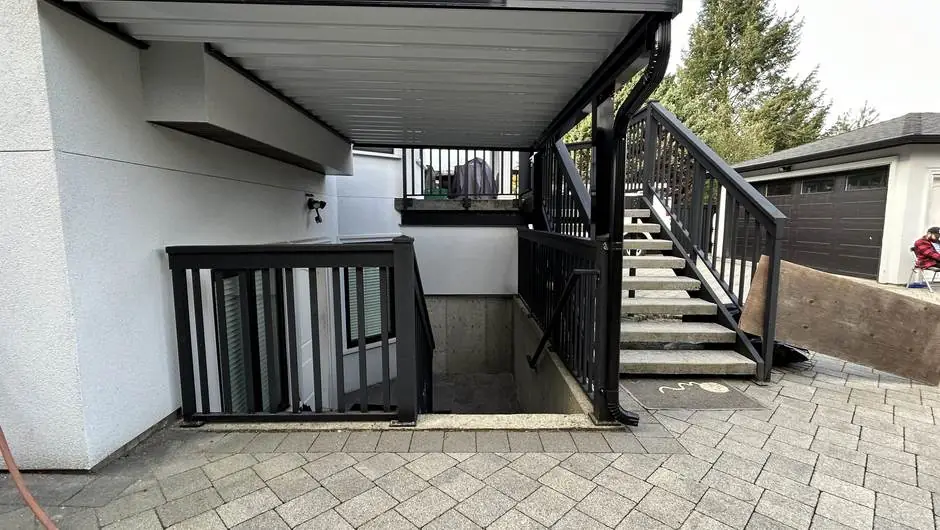
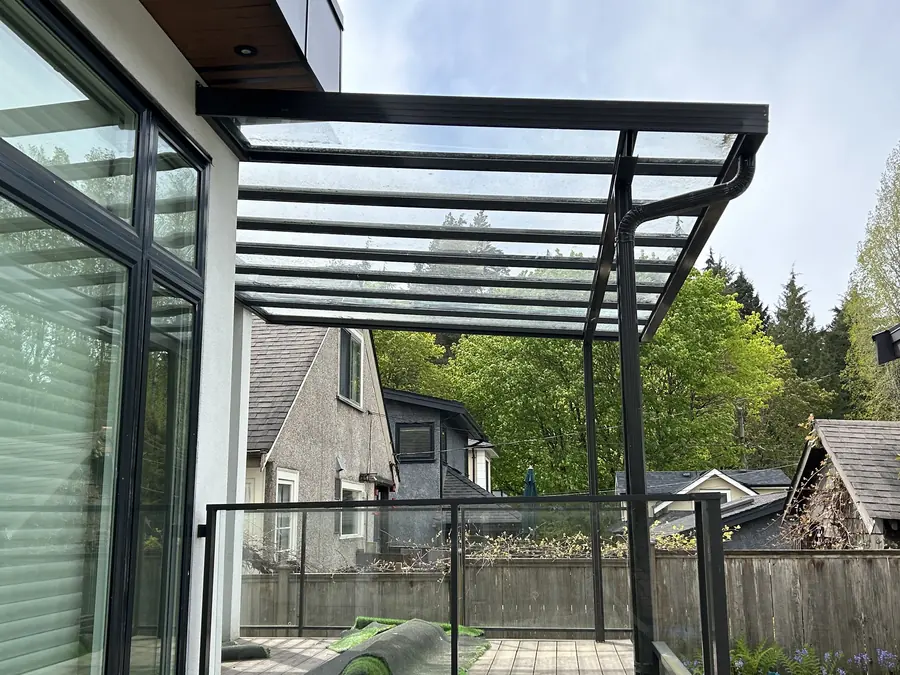
Into a gutter built into the front edge of the cover, then down an aluminum downspout to wherever you want it, a drain, a rain barrel, or simply away from the foundation. The gutter is part of the aluminum extrusion rather than a strip screwed on afterwards, so there is nothing to sag, leak at a joint or come loose in a windstorm. Downspouts are powder-coated to match the frame, so they read as part of the structure instead of an afterthought bolted to a post.
Will it handle Vancouver rain and snow?
The frames are engineered to the snow and wind loads for your municipality, which is not the same number everywhere. North Shore installations are specified for more snow than Richmond, for example. Every cover drains through a gutter into a downspout so water leaves the deck rather than sheeting off the front edge.
How much does a patio cover cost?
It comes down to the span, the roof material, how the cover attaches to the house and how easy the site is to get equipment into. That is why we measure on site rather than quoting over the phone. The estimate is free, written, and there is no deposit to get one.
What if I re-side or re-roof the house later?
The cover bolts to a ledger rather than being built into the house, so it can be taken down and put back up when a roofer or siding crew needs the wall. It is a clean removal, not a demolition. The same is true if you ever want the deck open again or a future owner would rather not have it.
Can you attach a cover to any house?
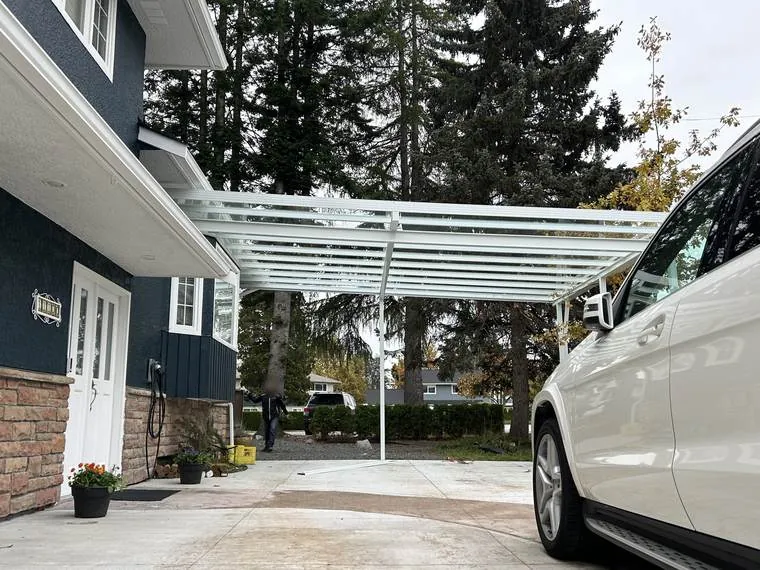
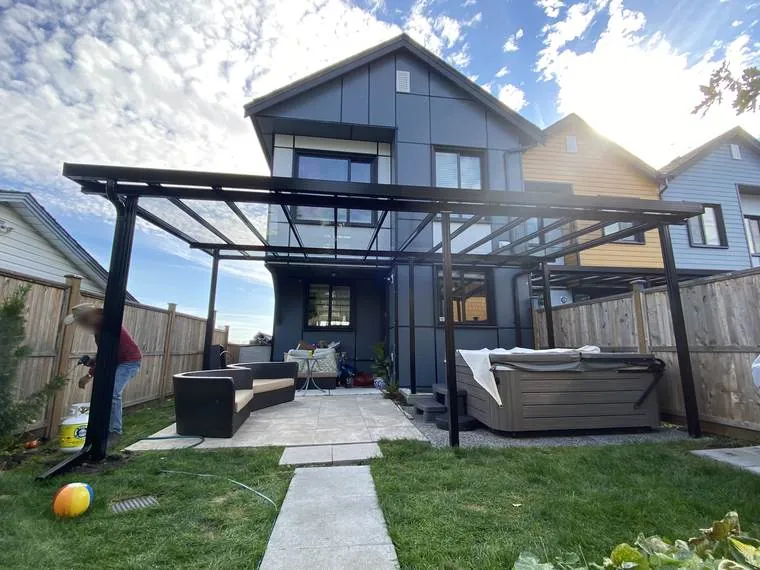
Almost always, but the wall matters. We check the framing and the condition of the siding or stucco before quoting, and flash the ledger properly so nothing tracks water back along the wall. Where a wall will not take the load, we free-stand the structure on its own posts instead.
Is a patio cover the same as an awning?
People use the words for the same thing, and we build what most people mean by either. The difference worth knowing is fabric versus aluminum. A retractable fabric awning winds out when you want it and has to be wound back in before a windstorm, and the fabric gives out after a handful of West Coast winters. What we build is a fixed aluminum awning, engineered to your municipality's snow and wind loads, with a gutter in the front edge. It stays up all year, needs nothing done to it in October, and carries a ten-year warranty on the frame and finish.